
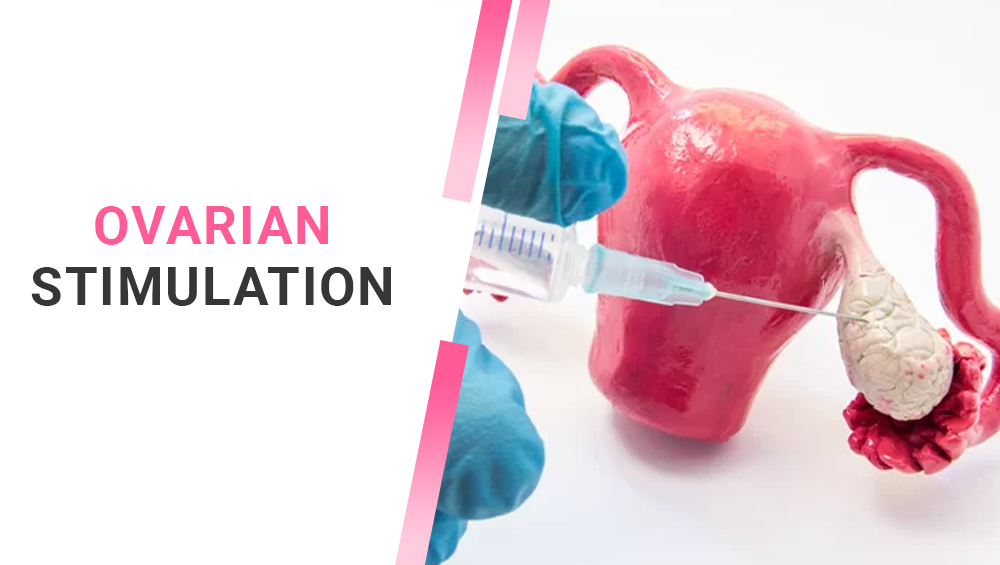
Ovarian Stimulation
Ovarian stimulation is a medical procedure designed to enhance fertility by increasing the number of eggs released during ovulation. This process is integral to fertility treatments like artificial insemination and in vitro fertilization (IVF), significantly improving the chances of conception.
How Ovarian Stimulation Works?
Ovarian stimulation involves the administration of medications that encourage the ovaries to produce multiple eggs in a single cycle. This is in contrast to the natural menstrual cycle, where typically only one egg is released. The primary goals of ovarian stimulation are:
- Increasing Egg Production:
- By stimulating the ovaries, more eggs are produced and matured, ready for retrieval.
- This is crucial for procedures like IVF, where having multiple eggs increases the likelihood of fertilization and embryo formation.
- Enhancing Artificial Insemination Success:
- Prior to artificial insemination, ovarian stimulation increases the number of eggs available.
- This boosts the chances that the inseminated sperm will reach the fallopian tubes and successfully fertilize an egg.
- Maximizing IVF Success Rates:
- In IVF, more than one egg is retrieved during the egg retrieval process.
- Multiple eggs are then mixed with sperm in a laboratory setting, enhancing the probability of forming viable embryos for transfer.
The Ovarian Stimulation Process
- Initial Consultation and Assessment:
- Patients undergo a thorough evaluation to determine the most appropriate stimulation protocol based on their medical history and fertility goals.
- Medication Regimen:
- Specific medications are prescribed to stimulate the ovaries.
- These may include gonadotropins, which directly stimulate the ovaries, and other hormonal treatments to support egg development.
- Monitoring:
- Regular ultrasounds and blood tests are conducted to monitor the ovaries’ response to the medication.
- This ensures that the eggs are developing properly and helps in timing the egg retrieval or insemination procedure.
- Egg Retrieval or Insemination:
- Once the eggs are mature, they are retrieved for IVF or the patient undergoes artificial insemination.
- The collected eggs are then fertilized with sperm in a controlled lab environment, and the resulting embryos are monitored for development.
Who Is It For?
Ovarian stimulation is a key component of many fertility treatments and is suitable for a range of individuals and couples experiencing fertility challenges. Here’s a look at who can benefit from ovarian stimulation:
- Women with Ovulatory Disorders:
Women who have irregular ovulation or do not ovulate at all (anovulation) can benefit from ovarian stimulation. Conditions such as polycystic ovary syndrome (PCOS) often require stimulation to induce ovulation.
- Couples Undergoing In Vitro Fertilization (IVF):
Ovarian stimulation is a critical part of the IVF process. By producing multiple eggs, it increases the chances of retrieving viable eggs for fertilization, thereby enhancing the likelihood of creating healthy embryos.
- Women with Unexplained Infertility:
For couples where no specific cause of infertility has been identified, ovarian stimulation combined with intrauterine insemination (IUI) or IVF can improve the chances of conception.
- Women with Low Ovarian Reserve:
Women who have a lower number of available eggs (low ovarian reserve) may benefit from ovarian stimulation to maximize the number of eggs retrieved during an IVF cycle.
- Older Women:
As women age, the quantity and quality of their eggs decrease. Ovarian stimulation can help older women produce multiple eggs in one cycle, improving the odds of successful fertilization and pregnancy.
- Women Preparing for Fertility Preservation:
Women who wish to preserve their fertility through egg freezing may undergo ovarian stimulation to produce multiple eggs, which can then be retrieved and frozen for future use.
- Couples with Male Factor Infertility:
When male infertility factors are present, such as low sperm count or motility, ovarian stimulation can be used to produce multiple eggs to increase the chances of successful fertilization through IVF.
- Couples Opting for Donor Sperm:
For single women or couples using donor sperm, ovarian stimulation can enhance the effectiveness of treatments like IUI or IVF by increasing the number of eggs available for fertilization.
- Women Undergoing Genetic Testing:
Women who need preimplantation genetic testing (PGT) as part of their fertility treatment may undergo ovarian stimulation to produce multiple embryos, allowing for selection of the healthiest embryos for transfer.
Ovarian stimulation is a versatile and widely used fertility treatment that can benefit a variety of individuals and couples facing different fertility challenges.
What are the Benefits Of Ovarian Stimulation?
Ovarian stimulation plays a crucial role in fertility treatments, offering numerous benefits for individuals and couples trying to conceive. Here’s an overview of how ovarian stimulation helps and its key benefits:
How Ovarian Stimulation Helps:
Increases Egg Production:
By using hormone medications, ovarian stimulation encourages the ovaries to produce multiple eggs in a single menstrual cycle. This is essential for treatments like in vitro fertilization (IVF), where multiple eggs increase the chances of successful fertilization.
Improves Timing for Conception:
Hormone injections or medications help regulate the timing of egg maturation and ovulation. This precision allows for optimal timing of egg retrieval or artificial insemination, enhancing the chances of fertilization.
Enhances Fertility Treatment Outcomes:
Whether it’s IVF or artificial insemination, having multiple mature eggs available significantly improves the likelihood of creating viable embryos, leading to higher success rates in fertility treatments.
Higher Success Rates:
By increasing the number of eggs produced, ovarian stimulation raises the odds of fertilization and successful pregnancy. This is particularly beneficial for individuals with ovulatory disorders or those who have had difficulty conceiving naturally.
Improved Egg Quality:
Stimulation protocols are designed to not only increase the quantity but also enhance the quality of eggs, which is vital for the development of healthy embryos.
Why Choose Us for Ovarian Stimulation:
Personalized Treatment Plans: Each patient receives a tailored treatment plan based on their unique needs and fertility goals.
State-of-the-Art Facilities: Our clinic is equipped with the latest technology and laboratory facilities to support successful outcomes.
Comprehensive Support: From initial consultation through to treatment and follow-up, we provide continuous support and guidance to help you achieve your dream of parenthood.
Contact Us: If you’re considering ovarian stimulation as part of your fertility journey, contact us today to schedule a consultation. We are here to help you every step of the way.